“One of the most dangerous things a society can do is confuse what is visible with what is valuable.”
A conversation I overheard recently has stayed with me far longer than I expected.
A parent had just visited a preschool classroom. The children were gathered around a table building structures, talking to one another, experimenting with materials, painting, laughing, disagreeing, negotiating, and occasionally making glorious messes. After watching for a few minutes, the parent turned and asked a question that I suspect thousands of parents in Bangalore silently ask every year while searching for the top 10 schools in whitefield bangalore for their child.
“But when does the actual learning begin?”
The question was not unreasonable. In fact, it may be one of the most honest questions modern parenting has produced. Yet hidden inside that question is an assumption that deserves examination. The assumption is that learning becomes real only when it starts looking academic. We have slowly become conditioned to believe that if a child is writing, learning is happening. If a child is reciting, learning is happening. If a child is filling worksheets, learning is happening. If a child is producing visible evidence that can be photographed, filed, compared, and displayed, learning is happening.
But what if some of the most important learning a child will ever experience is almost completely invisible?
This is where schools like The Bangalore School are creating a fascinating conversation among parents looking for preschool admissions in Bangalore. The conversation is not really about curriculum. It is not even about play-based learning versus academic learning. The deeper conversation is about how childhood itself should be understood.
Many of us grew up in educational systems that taught us to associate seriousness with silence. A quiet classroom felt productive. A child sitting still looked disciplined. A worksheet looked rigorous. A completed notebook looked reassuring. Even today, when parents search for the best preschools in Bangalore, the instinct is often to look for visible indicators of progress because visible indicators calm parental anxiety. They tell us our child is moving forward. They provide evidence. They make us feel safe.
Yet developmental psychology, neuroscience, and some of the most respected early childhood education models in the world suggest something profoundly uncomfortable: young children do not naturally learn in the way adults expect them to learn. Their brains are not miniature adult brains waiting to absorb information efficiently. A preschool child learns through movement, touch, experimentation, social interaction, imagination, observation, repetition, sensory exploration, emotional engagement, and play. In other words, the very activities adults often dismiss as “just play” may actually be the neurological engine driving future learning.
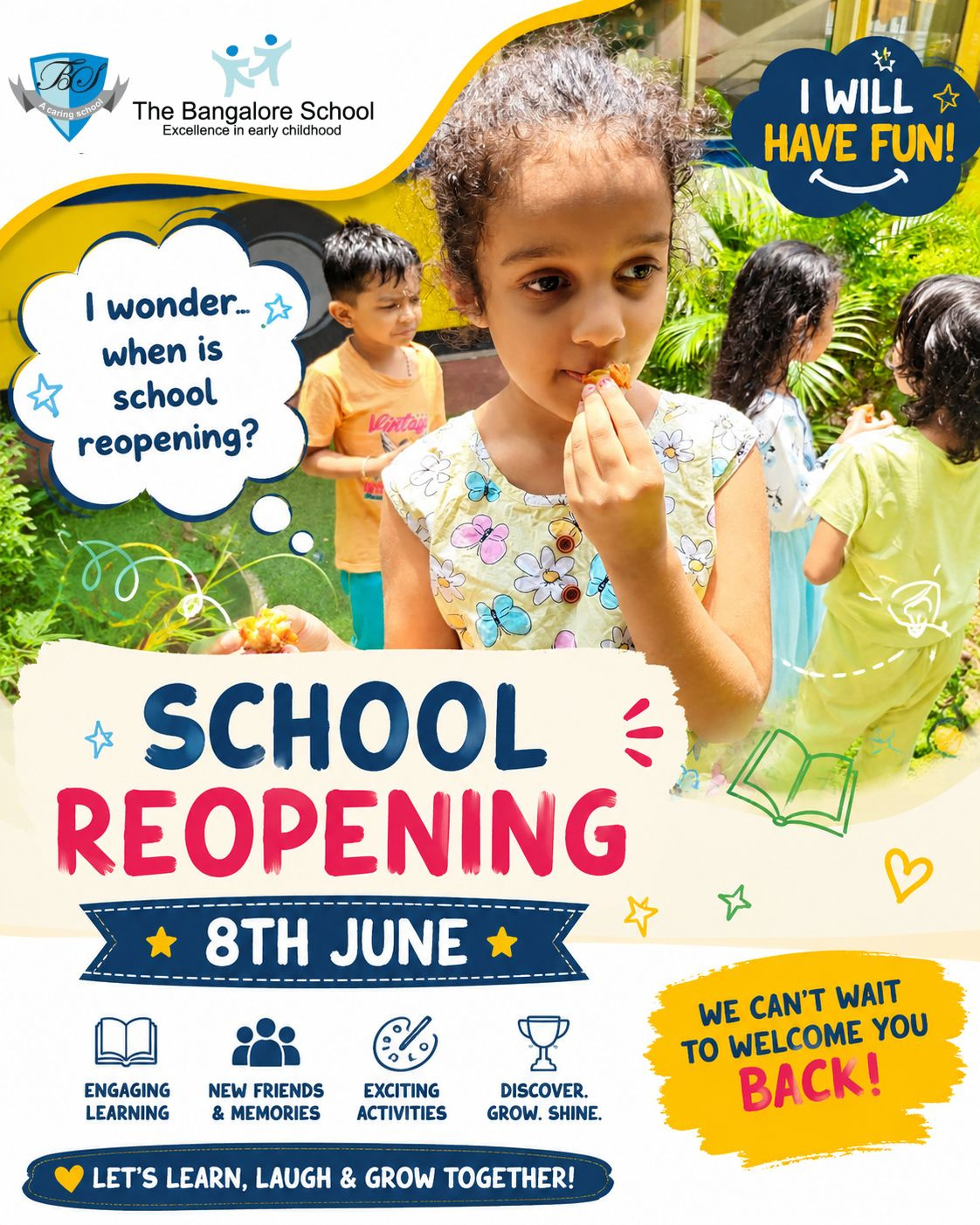
At The Bangalore School, there appears to be a recognition that best nursery school in bangalore should not become a race toward visible achievement. Instead, the environment seems designed around the developmental realities of childhood itself. A child building with connectors is not simply passing time. The child is developing fine motor control, spatial reasoning, patience, creativity, persistence, and problem-solving simultaneously. A child negotiating with peers over materials is not merely socialising. The child is learning communication, emotional regulation, conflict resolution, empathy, perspective-taking, and collaboration. A child painting freely is not simply making art. The child is strengthening sensory integration, confidence, experimentation, self-expression, and independent thinking.
The irony is remarkable. Many of the qualities parents desperately hope their children possess twenty years from now—creativity, leadership, resilience, confidence, adaptability, innovation, communication skills, emotional intelligence—often begin developing through experiences that do not immediately look academic at all.
Of course, every parent eventually arrives at the same counterargument. It is the question that quietly follows every discussion about play-based learning and holistic education. What about the real world? What about competition? What about academics? What about reading, writing, mathematics, and school readiness?
These concerns are entirely valid. Parents are not worried because they misunderstand education. They are worried because they care deeply. No parent wants to discover later that they prioritised happiness at the expense of preparedness. No parent wants their child to struggle because foundational skills were ignored. The fear is understandable.
But perhaps the real question is not whether academics matter. Of course they matter. The question is whether academics flourish best when they are pushed prematurely or when they emerge from healthy development. Children eventually learn to read. They eventually learn to write. They eventually learn mathematics. What is far less guaranteed is that they will remain curious. What is far less guaranteed is that they will retain confidence in their own ideas. What is far less guaranteed is that they will continue loving learning once formal schooling becomes demanding.
This is why The Bangalore School’s approach feels increasingly relevant in a city like Bangalore, where parents are searching not only for the best preschool but for a meaningful philosophy of education. The school seems to understand that school readiness is not simply about recognising letters or counting numbers. School readiness is also about emotional readiness. It is about confidence. It is about attention. It is about communication. It is about resilience. It is about helping children develop the internal foundations that make future learning possible.
Perhaps the most fascinating shift happening among modern parents is that many are beginning to question the very definition of success they inherited. Increasingly, successful adults are admitting that academic achievement alone did not necessarily prepare them for uncertainty, relationships, creativity, mental wellbeing, or self-understanding. Many achieved excellent grades yet struggle with anxiety. Many learned how to compete but never learned how to collaborate. Many became high performers but lost curiosity somewhere along the journey.
This is forcing parents to ask a different question when they visit a preschool.
Not, “How quickly can my child move ahead?”
But, “Who is my child becoming while moving ahead?”
That question changes everything.
Because suddenly, the loud classroom may be more meaningful than the silent one. The child asking endless questions may be more prepared than the child memorising answers. The child building imaginary structures may be developing more future-relevant skills than anyone realises. The child painting, experimenting, negotiating, and exploring may not be delaying learning at all. They may be experiencing the deepest learning childhood has to offer.
Perhaps the greatest mistake modern education makes is assuming that childhood is merely preparation for life. What if childhood is life? What if preschool is not a waiting room for future success but one of the most important developmental stages a human being will ever experience?
And if that is true, perhaps the best preschool in Bangalore is not the one that rushes children toward adulthood fastest.
Perhaps it is the one that understands childhood deeply enough to protect it.